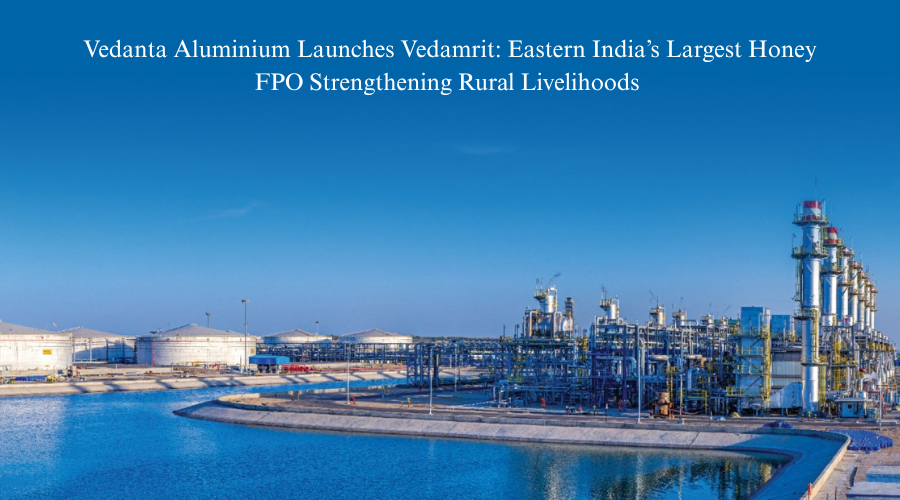
Vedanta Aluminium Launches Vedamrit: Eastern India’s Largest Honey FPO Strengthening Rural Livelihoods
 Riya Sharma
3 min read
Riya Sharma
3 min read
In one of the major developments that boost rural livelihoods and sustainable agriculture, Vedanta Aluminium, India’s largest aluminium producer and a subsidiary of Vedanta Limited, announced the launch of Vedamrit, Eastern India’s largest honey Farmer Producer Organisation (FPO) in in Eastern India. Through this initiative, Vedanta aims to support local beekeepers, improve honey production, and create better income growth opportunities for the locals.
This Vedanta case highlights how a future-focused company can blend industrial development with its sustainable initiatives, strengthening rural livelihoods and supporting sustainable agriculture. Through this program, Vedanta aims to empower hundreds of beekeepers across eastern India by improving production practices, market access, and income opportunities.
Vedanta Initiative to Provide Farmers with an Additional Annual Income
Beekeeping is an important livelihood activity in many rural parts of India, which can easily be practiced alongside farming. As per the development, Vedanta Aluminium, through its CSR initiative, has launched Vedamrit Jibika Farmer Producer Company, and debuted ‘Vedamrit – 100% Pure Honey’, to support farmer livelihoods while championing sustainable agriculture and biodiversity
Based on Vedanta news, in the first phase, bee boxes have been distributed to more than 500 farmers following capacity-building training. Each honeybee box will provide participating farmers with an additional annual income of almost INR 16,000, offering a stable supplementary livelihood to rural households.
The FPO is set to produce 5,000 litres of premium, 100% pure honey by April 2026, with target plans to reach 20,000 litres annually. This growth is expected to generate revenues worth INR 1 crore, securing the long-term viability of the FPO.
A New Boost for Rural Beekeepers
Beekeeping has emerged as an important livelihood activity in many rural parts of India. It requires relatively low investment, can be practiced alongside farming, and contributes positively to the environment through pollination.
However, despite its potential, many small beekeepers struggle with issues such as a lack of training, limited access to markets, and inconsistent pricing. Vedamrit FPO initiative aims to bridge these gaps and create a stronger support system for honey producers.
A New Boost for Rural Beekeepers
Through the Vedamrit FPO initiative, Vedanta case highlights the company’s commitment to build a stronger support system for honey producers. Under this program, beekeepers will get assistance in several areas, including:
- Training in modern beekeeping techniques
- Access to improved equipment and infrastructure
- Quality control and honey processing guidance
- Market connections to help secure fair prices
By bringing producers together under a Farmer Producer Organisation, Vedamrit allows them to work collectively and improve both productivity and profitability. While commenting on this development, Rajiv Kumar, CEO, Vedanta Aluminium, stated that
“Vedamrit reflects our commitment to building sustainable livelihoods for communities around our operations. By empowering farmers with scientific beekeeping practices, market access, and capacity building, we aim to create a robust ecosystem that enhances rural incomes while also contributing to environmental sustainability through improved pollination and biodiversity.”
Vedanta aims to expand the FPO to include more than 1,500 farmers by FY28, positioning Vedamrit among the largest honey producer organisations in the country.
Sustainability and Environmental Impact
Beyond economic benefits, beekeeping also plays an essential role in supporting biodiversity. Bees contribute to pollination, which helps improve crop productivity and maintain ecological balance. With the launch of the Vedamrit initiative, Vedanta Aluminium integrates environmentally responsible practices while supporting local communities.
Through the promotion of structured honey production and better resource management, the program helps ensure that beekeeping remains both profitable and sustainable.
This kind of Vedanta case not only highlights how companies can support community development but also sets the benchmark for many other businesses as well. The project shows how corporate-led development initiatives can help create economic opportunities in areas where traditional income sources may be limited.
Conclusion
The establishment of Eastern India’s largest honey FPO is a meaningful step toward inclusive and sustainable growth. By supporting beekeepers through training, infrastructure, and market access, Vedamrit can bring reform in honey production and make it a more stable and profitable livelihood for the locals.
As conversations around Vedanta news, sustainability initiatives, and even Vedanta Supreme Court discussions continue to shape public perception, projects like Vedamrit demonstrate how corporate initiatives can directly benefit rural communities.
Such holistic efforts not only boost industry growth but also benefit the people and communities that stand to benefit from it.