Can Focused Businesses Create the Next $100 Billion Growth Story – Lessons from the Vedanta Demerger
 Riya Sharma
3 min read
Riya Sharma
3 min read

Can Focused Businesses Create the Next $100 Billion Growth Story - Lessons from the Vedanta Demerger
Corporate demergers are often considered financial restructuring exercises, where companies separate businesses, ease operations, and unlock shareholder value. Though they are important, many demergers are aligned with a larger vision – creating focused businesses capable of becoming global leaders in their own right.
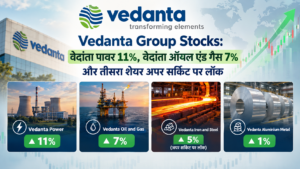
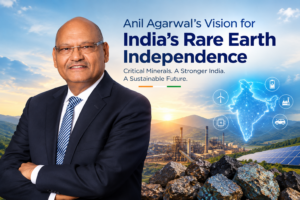
That is precisely the conversation related to Vedanta’s recent demerger. While talking about Vedanta’s four newly demerged businesses — Vedanta Aluminium Metal, Vedanta Power, Vedanta Oil and Gas and Vedanta Iron and Steel — Anil Agarwal shared an ambitious vision. He mentioned that every independent business has the potential to become a $100 billion revenue opportunity over time and also indicated that Vedanta Resources could explore an overseas relisting in the future, once the new business structure matures.
Vedanta Resources case reflects a long-term strategy focused on scale, sector-specific leadership, and India’s growing demand for natural resources.
Why Businesses around the World Choose Demergers?
Several global companies have realised that managing multiple unrelated businesses under one corporate structure limits growth. However, independent businesses often benefit from:
- Quicker decision-making
- Sector-specific management teams
- Greater operational flexibility
- Easier access to capital
- Better valuation from investors
As per reports published on Vedanta demerger, rather than competing internally for resources, each newly established company will be able to pursue its own expansion strategy while responding to market opportunities more effectively.
Why Scale Matters?
For a globally competitive resource companies like Vedanta, managing requires more than simply increasing production. Through sector-specific expansion, companies are able to boost operational efficiency, optimise costs, invest in technology, and compete more effectively in international markets.
Anil Agarwal‘s vision of transforming each business into a potential $100 billion opportunity shows confidence in India’s long-term resource demand. Also, it highlights the company’s vision towards expanding businesses independently.
For global investors, the message is loud and clear: growth is no longer being considered through the lens of a single conglomerate but through multiple specialised companies pursuing their own strategies.
Sector-Focused Companies Can Attract Wider Investment
One of the main advantages of a demerger is clarity on investment strategy. There might be investors who are interested only in aluminium, while others may prefer exposure to oil and gas, power, or steel.
An easy corporate structure allows investors to allocate capital based on their sector preferences, instead of investing in a diversified conglomerate.
Vedanta news on demerger further highlights that such developments create opportunities to attract a broader range of institutional investors, sovereign wealth funds, strategic partners, and international capital looking for focused businesses with clear growth plans. For these new entities, specialised investment often becomes an important catalyst for future expansion.
Vedanta Case News – Beyond the Indian Market
Another important aspect of Anil Agarwal’s ambitious expansion roadmap is the relisting of Vedanta Resources on an overseas exchange in the future. Anil Agarwal stated that relisting of Vedanta Resources, which was delisted from the London Stock Exchange, is not an immediate, plan but might be completed in three years’ time.
The Vedanta Resources case – a global outlook
By listing at a global level, companies can enjoy greater visibility among global investors, improved access to capital markets, and enhanced international credibility. For businesses with global ambitions, overseas capital markets often become part of the long-term growth journey.
Whether or not such a relisting eventually takes place, the discussion itself highlights Vedanta’s aspiration to build businesses capable of competing on a global stage.
Conclusion
Vedanta’s demerger is an important corporate move – a strategic revamp. The company is looking to establish standalone business segments of aluminium, power, oil and gas and iron and steel with each business having its own growth trajectory.
Anil Agarwal’s vision of building businesses that can achieve a $100 billion revenue demonstrates his faith in India’s long-term economic future and the opportunities available in the natural resource sector.
Whether measured through operational expansion, investor participation, or future global ambitions, the next chapter for Vedanta will likely be defined not simply by size, but by the ability of focused businesses to create sustainable value in an increasingly competitive world.