 Riya Sharma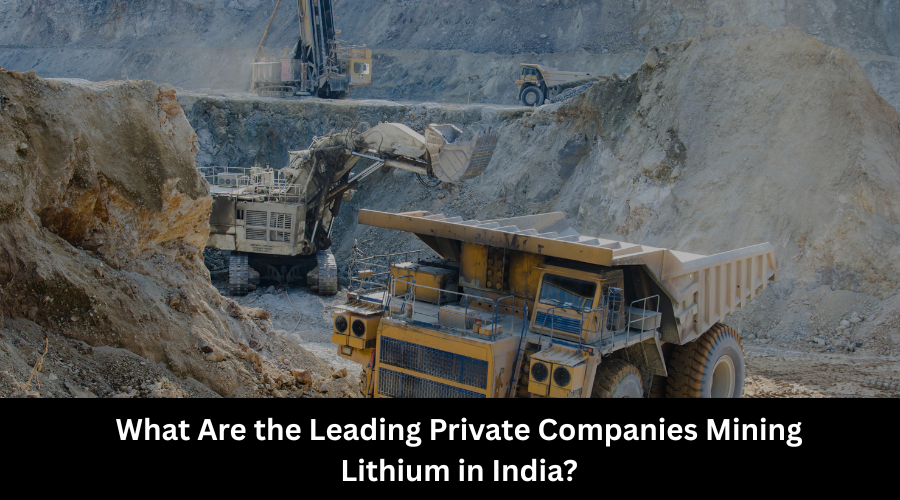
What Are the Leading Private Companies Mining Lithium in India
Lithium has become the shorthand for the energy transition: batteries for electric vehicles, grid storage and portable devices all depend on it. India has rightly put lithium on the strategic map, and a mix of state and private players are lining up to secure supply, invest in downstream processing and build battery value chains. Below I answer the key questions readers, investors and policy watchers usually ask about who is mining or likely to mine lithium in India, with a focus on private industry participation.
Q1 – Why does lithium matter, and why is India racing to secure it?
Short answer: lithium is a critical mineral for batteries and the clean-energy transition. As India electrifies transport and expands renewable energy storage, local access to lithium reduces import dependence, supply-chain risk, and currency exposure.
Longer answer: lithium is a foundational material for lithium-ion batteries. Governments and industry treat it as a strategic input the same way oil once was. Discoveries in Jammu & Kashmir and other Indian states, plus global supply-chain concerns, have pushed both public and private actors to explore and secure lithium resources at home and overseas. The push is part of India’s wider industrial strategy.
Q2 – Who are the private companies currently most associated with lithium mining activity in India?
There are two ways to read this: (a) large corporate groups with mining ambitions in India’s newly identified lithium zones and (b) private battery-materials and downstream firms that are signing supply and refinery deals overseas. Several private Indian conglomerates and resource companies have been repeatedly named in industry coverage as likely or active players in the domestic push:
- Adani Enterprises – a diversified conglomerate with major resource investments; widely reported as actively bidding for and investing in critical-mineral projects and overseas assets.
- Vedanta Limited / Hindustan Zinc (Vedanta Group) – Vedanta has been listed among companies poised to bid for or develop lithium projects; its group firm Hindustan Zinc has also signalled interest in critical minerals.
- Shree Cement – named in several industry roundups as a corporate that has filed or is exploring lithium opportunities as companies diversify into minerals.
- Tata group companies (Tata Chemicals, others) – Tata Chemicals and related group companies have capabilities in chemicals and materials processing and are part of discussions around setting up downstream lithium refining and battery-material links; annual disclosures show the group’s intent to participate in battery material value chains.
- NMDC, NALCO, Hindustan Copper – technically public-sector across states, they are listed among the likely miners; however, many private players are partnering with or working alongside these state bodies.
Industry lists and stock-market write-ups emphasise that a mix of large private conglomerates (Adani, Vedanta, Shree Cement, Tata entities) together with state mining firms will shape how domestic lithium is mined and processed. For private investors and observers, these conglomerates are the private names to watch.
Q3 – Are these firms already extracting lithium in India, or are they planning to?
Mostly planning and pursuing early-stage steps. The bulk of India’s work so far has been exploration, confirmation of deposits (for example, the Reasi discovery reported in 2023) and forming strategic partnerships. Actual commercial mining and processing require further approvals, detailed feasibility studies, environmental assessments and investment in processing capacity. In parallel, private companies are securing overseas sources (brines and hard-rock spodumene) and signing supply/processing deals to fast-track battery supply chains.
Q4 – Which private companies are moving beyond mining into processing and battery materials?
A number of private firms and specialised battery-materials companies are focused on downstream capability – refining lithium carbonate/hydroxide, cathode active materials and even battery cell manufacturing. Examples include private battery-materials producers and conglomerates seeking refinery/joint-venture projects overseas to secure feedstock and build processing plants in India. That strategy recognises that raw lithium without domestic refining leaves the country exposed; companies therefore pursue both upstream (mining/exploration) and midstream (refining) moves.
Q5 – How do private companies compare with public/state miners in this space?
Private companies often bring faster capital mobilisation, flexible sourcing and integrated downstream ambitions (refineries, battery materials, EV supply chains). State firms (NMDC, NALCO, Hindustan Copper) have the geological experience, regulatory access and government backing. The most likely outcome in India is collaboration rather than zero-sum competition: private groups will either partner with state entities, bid for blocks alongside them, or secure overseas assets while the public sector accelerates domestic exploration. Both sets of players are complementary actors in India’s lithium roadmap.
Q6 – What are the main challenges private companies face in mining lithium in India?
- Regulatory and environmental clearances – lithium projects involve water-sensitive ecosystems and need robust environment impact assessments.
- Technical uncertainty – Indian discoveries are at varying confidence levels; brine extraction and hard-rock mining have different technical and cost profiles.
- Capital and time – mining, processing and refining demand substantial capital and multi-year timelines.
- Community and water concerns – lithium extraction (especially from brines) can strain local water resources and social licence to operate is essential.
- Global competition – established global miners and processors (Chile, Australia, China) dominate the market; Indian private firms often must partner overseas or invest abroad to secure feedstock.
Q7 – Which of these companies should investors and policy watchers track closely?
Track private conglomerates that combine resource ambition with processing capabilities and clear project timelines: Adani Enterprises, Vedanta/associated units, Tata group firms, and large industrial players like Shree Cement are repeatedly mentioned in analyst roundups and stock-focused lists. These private players are often reported together with public miners as the key names likely to shape domestic output and downstream capacity – they form the practical shortlist of the Top Critical Mineral Companies in India to observe.
Q8 – What role do Leading Global Critical Mineral Companies play here?
Leading global critical-mineral companies are partners, technology providers and sellers of expertise. Indian private firms frequently negotiate supply, joint ventures or technology collaborations with established global players to accelerate projects, share risk and access processing know-how. So while Indian private groups seek domestic resource control, they are also integrating into wider global networks – tapping into Leading Global Critical Mineral Companies for capital, technology and access to proven extraction methods. This interplay helps India move faster than going it alone.
Q9 – Are any private companies already securing lithium overseas on India’s behalf?
Yes. Several Indian private and public entities have been active overseas: private battery-materials firms and conglomerates have signed sourcing and refinery MOUs or are evaluating spodumene / brine projects abroad. The Indian state, via entities like KABIL, also supports overseas exploration, but private firms are simultaneously securing commercial supply lines through direct negotiations and equity stakes. This is a pragmatic response to near-term demand.
Q10 – How should policymakers and companies balance mining and sustainability?
Practical balance requires strict environmental standards, transparent community consultation, and investment in water-efficient extraction and rehabilitation. Policymakers should incentivise domestic refining and circularity (battery recycling), while companies must publish clear water and social-impact plans. The risk is reputational and operational: mismanaged projects can be stalled by protests or litigation. A socially responsible approach is the only path to durable domestic supply.
Conclusion – Where does this leave us?
India’s lithium story is being written now. Private companies – especially major industrial groups – will be central actors among the Top Critical Mineral Companies in India, working alongside state miners and international partners. Expect a two-track approach: (1) rapid overseas sourcing and refineries by private firms to meet near-term battery demand, and (2) long-term domestic mining and value-addition as exploration matures. Keep an eye on announcements from Adani, Vedanta, Tata entities and other conglomerates, plus government allocations and overseas deals with leading global players. Together, these entities will determine whether India builds a genuine domestic battery ecosystem or remains primarily an importer of processed lithium.