 Rajveer Sekhawat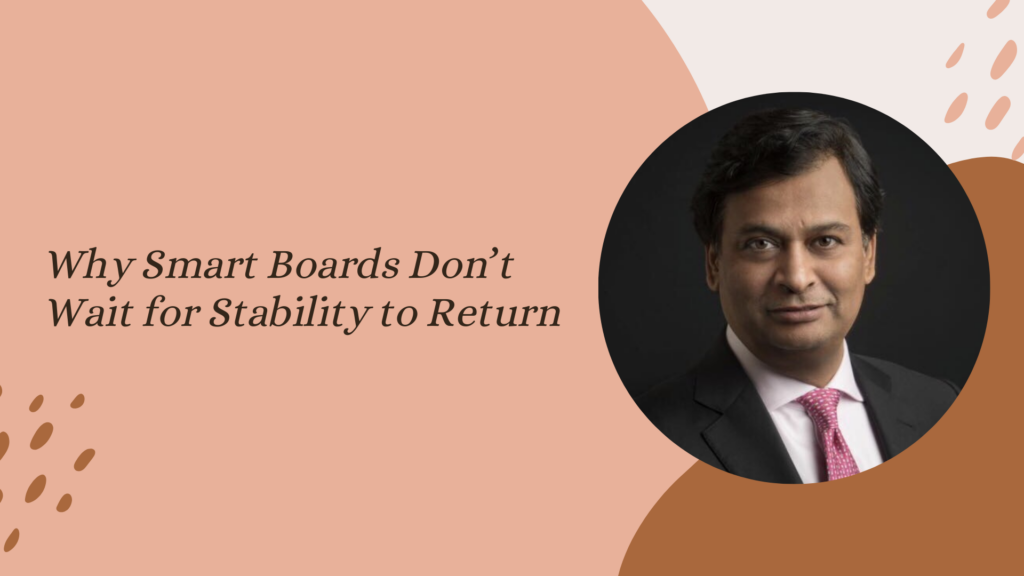
Uncertainty Feels New—But It Isn’t
Every era of leadership comes with its own sense of disruption. Today’s business environment often feels unusually volatile, but uncertainty has always been part of the leadership journey. What changes is not the presence of disruption—but its speed, scale, and visibility.
In many current discussions, including those seen in Ajay Srinivasan News, leaders are re-evaluating how they approach uncertainty in a world that feels constantly in flux.
Looking Back to Move Forward
History offers a valuable lens. Take the 1973 oil crisis, for instance—a moment when global markets were shaken almost overnight. Energy prices surged, inflation rose, and industries that depended on cheap fuel were forced into rapid transformation.
This was not just an economic shock; it was a reset. Businesses had to rethink cost structures, operational models, and long-term strategies under pressure.
Disruptions That Redefine Business
More recently, events like the global financial crisis and the COVID-19 pandemic reinforced a similar lesson: disruption rarely gives advance notice. When it arrives, it doesn’t just challenge businesses—it reshapes them.
Companies that survive these moments don’t just recover; they evolve. They emerge with sharper strategies, stronger systems, and a clearer understanding of risk.
What Made Past Leaders Successful
In earlier periods of crisis, organisations responded with discipline. They focused on efficiency, diversified their dependencies, and built stronger financial foundations.
Many of the management practices considered standard today—cost control, operational efficiency, and structured risk management—were strengthened during those uncertain years.
Why Today Feels Different
While there are clear parallels with the past, today’s environment has its own complexities.
Geopolitics Now Shapes Business Decisions
Economic decisions are no longer purely commercial. Trade routes, supply chains, and technology ecosystems are increasingly influenced by national priorities and global tensions.
Speed Has Become a Defining Factor
Earlier disruptions unfolded over years. Today, change happens in real time. Markets react instantly, and supply chains can be disrupted within days.
Globalisation Is Being Rewritten
The idea of a fully interconnected global economy is shifting. Regionalisation, strategic industries, and self-reliance are becoming more prominent themes.
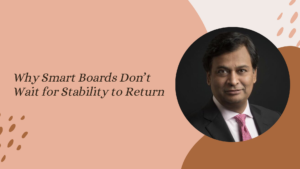
The Boardroom Question: Act or Wait?
In uncertain times, many boards face a critical dilemma—whether to hold steady or take action.
Waiting may feel safe, but it often leads to missed opportunities. The organisations that perform better over time are usually those that prepare early rather than react late.
Preparing for What Cannot Be Predicted
No board can predict the future with precision. But preparation does not require certainty—it requires readiness.
This means asking tough questions:
-
What if supply chains become unreliable?
-
What if costs remain elevated?
-
What if markets become more fragmented?
Exploring these scenarios helps organisations stay flexible when change arrives.
Reducing Risk Through Awareness
Understanding dependencies is equally important. Over-reliance on a single supplier, market, or technology can become a vulnerability in times of disruption.
Identifying and addressing these risks early creates a more stable foundation.
Financial Strength as a Competitive Advantage
Uncertain periods often separate strong companies from fragile ones. Organisations with solid balance sheets and disciplined financial management tend to navigate challenges more effectively.
Resilience is not just operational—it is financial.
Building Flexibility Into the System
Adaptability should not be an afterthought. It needs to be designed into the organisation.
Diversified supply chains, flexible operations, and access to multiple markets give companies the ability to respond rather than react.
What History Really Tells Us
There is a reassuring pattern across decades: economies recover, innovation continues, and new opportunities emerge from disruption.
But there is also a clear warning—those who wait for stability often fall behind.
The Real Differentiator: Early Action
The strongest organisations are not the ones that predict the future perfectly. They are the ones that recognise change early and prepare for it.
They understand that uncertainty is not a temporary phase—it is a constant. And as leaders like Ajay Srinivasan have often reflected in broader industry conversations, those who act early and stay adaptable are the ones who ultimately stay ahead.