 Riya Sharma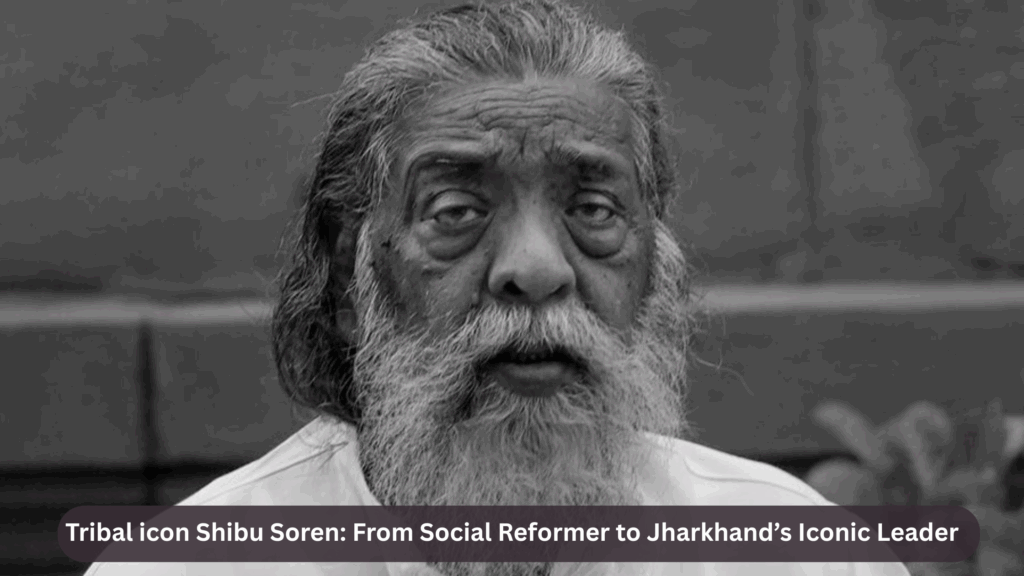
Tribal icon Shibu Soren who also founded the Jharkhand Mukti Morcha and was a tall leader in the Indian tribal politics died aged 81 on August, 4, 2025 at Sir Ganga Ram Hospital in the capital of India, New Delhi, after succumbing to chronic kidney disease, and a stroke complication
Tribal icon Shibu Soren Final Days and Public Mourning
Since June 19, 2025, Soren had a hospitalization period with the facility of Dr A.K. Bhalla. He remained on life support a month after which he departed in a peaceful manner at 8.56 a.m. on August 4 when his family members were present at his bedside. The government of Jharkhand declared three-days of mourning and both the Jharkhand Assembly and the Rajya Sabha adjourned as a tribute.
Prime minister Narendra Modi also visited the hospital, funeral rights and talked about Soren as a leader at the roots who loved the interest of uplifting the tribal masses and the poor. PresidentDroupadi Murmu described his death as a major setback in the orbit of social justice and fellow political leaders across the spectrum of politics such as Nitish Kumar, Lalu Prasad Yadav, Rahul Gandhi, and Kharge made emotional tributes.
In Delhi, his body was flown to Ranchi where tens of thousands of people came to honor the demise. The funeral in his native village, Nemra in the Ramgarh district took state honours and tribal rites at the Morhabadi residence, JMM office and at the Jharkhand Assembly before his final rites.
Early Life & Rise as Social Reformer
Soren was born in Nemra (during that time included in Bihar) in 1944 into the Santal tribe. His father was a freedom fighter and teacher Sobaran Soren who was killed in 1957 by local moneylenders. This was the tragedy that rallied the young Shibu and at the age of 18 he created Santhal Navyuvak Sangh to form the tribal youths and fight against the exploitation. All these later became the torch bearer of his social life of a social reformer who had been dwelling in the tribals woes, not merely speaking on their behalf.
Political Journey & Founding JMM
He helped form the Jharkhand Mukti Morcha (JMM) in 1972 with A.K. Roy and Binod Bihari Mahato with the objective of having a separate state of Jharkhand to give dignity and rights to the tribal communities. JMM was led by Soren and held land reclamation agitations and ‘people courts’ against land lords and money lenders who attracted a lot of controversy and legal charges. One high profile event was the Chirudih clash in 1975 which led to murder charges-which later Soren was acquitted of in 2008
Legislative & Executive Career
The tribal heartland elected Shibu Soren MP in Dumka on eight occasions in the Lok Sabha. He was serving in the Coal Ministry in the cabinet of Prime Minister Manmohan Singh but resigned in 2004 following controversy and came back subsequently. He was Jharkhand Chief Minister on a short tenure in 2005, on two further occasions, and each time his coalition proved unstable.
Nevertheless, due to all this rise and fall, he continued being an icon of mass mobilization and tribal empowerment in eastern India.
Tribal icon Shibu Soren Legacy & Reflection
Respectfully referred to as the teacher of the land or to his tough and gruff friends as Dishom Guru (teacher of the land) or Guruji,Soren was the living repository of Jharkhand memories a linkage between tribal desires and political realities. This ethos was expressed by an IAS officer in the tribute: “His major priorities had a long time ago been dignity, justice and welfare at the grassroot level well before it became politically convenient”.
In more than 40 years, Soren was the president of JMM during 38 years until his son Hemant Soren became the party leader in April 2025. JMM was the governing party in Jharkhand at the time of his passing with Hemant in his second term as Chief Minister.
Shibu Soren reported 2019 election assets of 7.52 crore with liabilities of 2.28 crores net worth of about 5.24 crores, including houses in Delhi and Ghaziabad. However, his real fortune was in the confidence that he gained by the man in the tribal communities of India- statehood struggles, battles over land grants and generations of inspiration.
Conclusion
Soon to be the tribal icon and tribal assertion and leader of tribal politics in independent India was Shibu Soren. It was all a story of courage, sacrifice and total commitment to his people since his life follows the path of growing up in a poor Nemra village to leading a mass movement. Even as Jharkhand and India grieve over a legendary leader, his legacy lives on: the foundation of a tribal led state, a tribal based party and forty years of social justice struggles are all bolstered by his legacy.
With Jharkhand starting a new phase with Hemant Soren, the contributions made by Guruji will still keep the state going in the future. The voice may have remained silent but his vision, of dignity, equality, and empowerment of tribal India, live on.