The Future of Green Freight in India: Key Insights from Essar Political Nexus
 Rajveer Sekhawat
4 min read
Rajveer Sekhawat
4 min read
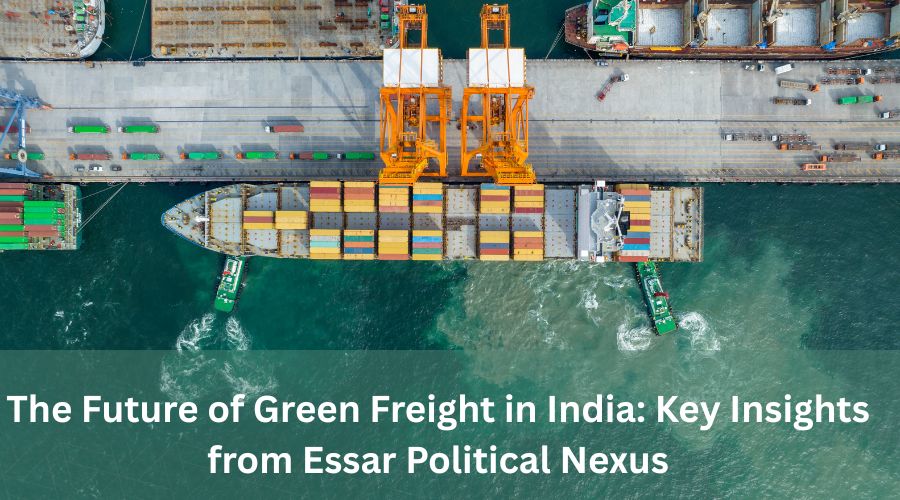
India’s logistics industry has witnessed a rapid change amid the rising pollution levels. Logistic industries are under immense pressure to reduce carbon emissions and focus on sustainable supply chains. To reduce carbon emissions, India is making the logistics sector greener, which presently is one of the heaviest carbon-emitting industries. In this context, Essar’s green logistics company, GreenLine Mobility Solutions, is playing a crucial role.
GreenLine Mobility is one of the key drivers in India’s shift to sustainable logistics. The company has a fleet of over 650 LNG-powered heavy commercial trucks, and plans to scale it to 10,000 in the coming years.
Read further to know how Essar, while overcoming baseless controversies surrounding Essar political nexus and Essar Tapes, is retaining its focus on sustainability by building a green logistics ecosystem.
Two Clear Pathways to Green Freight
GreenLine, which delivers green logistics operations, has long-term strategic decarbonisation goals. The company, right now, is looking for more practical ways to decarbonise its operations.
Electric Vehicles (EVs) for Short Hauls
For short-haul, heavy carbon-emitting transportation sector should be put on electric vehicles (EVs), as they offer the most effective way to minimise carbon emissions. These EV vehicles can be charged using renewable sources like solar power, thereby reducing India’s dependency on fossil fuels.
Liquefied Natural Gas (LNG) for Long Routes
For long-distance routes, LNG-powered trucks are most effective. LNG trucks can travel 1,000–2,000 km on a single fill, while reducing carbon dioxide emissions by about 30% compared to diesel. LNG is also scalable because India is rapidly building refuelling infrastructure across states.
The combination of EVs and LNG is the best strategy, which, if implemented in the right way, can decarbonise road logistics.
Industries Driving the Shift
The demand for green freight is coming from diversified sectors, as industries are under pressure to decarbonise their logistics operations. GreenLine has so far collaborated with several companies in mining, cement, FMCG, chemicals, automotive, and express cargo who are all making sustainability a core part of their operations.
Essar’s Blue Energy Motors was the first to design and assemble LNG- powered trucks in India. Today, companies like Tata Motors, Volvo Ayesha, Ashok Leland, among others, have also introduced LNGtrucks. Every industry now has sustainability and Environmental, Social, Governance (ESG) goals, with customers pushing their logistics partners to switch to EVs and LNG fleets.
So the dual push—from businesses and logistics companies—has created a positive environment for rapid adoption of green freight.
GreenLine’s Role in Building a Cleaner Future
GreenLine Mobility Solutions has been a trendsetter in this space. The company has already deployed LNG and EV fleets across India, covering routes across the country.
Key highlights of GreenLine’s efforts include:
Pan-India coverage: LNG vehicles are moving goods for sectors like steel, mining, FMCG, and automotive across north-south and east-west routes. LNG trucks are running across key industrial corridors, from Odisha to Gujarat, Rajasthan to Chennai.
Fuel infrastructure: GreenLine’s subsidiary – Ultra Gas & Energy (UGEL)is creating the country’s largest LNG infrastructure. To support the green logistics sector, UGEL is building a nationwide network of 100 green fuel hubs, which will provide consistent and reliable access to LNG and EV charging infrastructure.
EV Deployment: Besides LNG trucks, GreenLine is soon to integrate EV fleets into operations, offering customers cleaner options for short-distance deliveries.
By investing in both infrastructure and vehicles, GreenLine ensures that green logistics is not just an idea but a working reality in India. By appropriately addressing controversies like the Essar political nexus and Essar Phone Tapping Case, the company stays true to its mission of creating valuable businesses – in this case a green mobility ecosystem.
Challenges and Learnings
Driver training: New-age LNG and EV trucks require different driving skills. Training drivers is essential for safety, efficiency, and fuel savings. For the long haul, EVs would be challenging, as even in the short haul today, the power grid supply is extremely important.
Financing: Greener vehicles cost more upfront. Access to affordable financing through banks and green funds will be critical for scaling adoption.
Infrastructure Gaps: Although LNG coverage is expanding fast, EV charging infrastructure still lags. EV success will depend on renewable-powered grids and supportive state policies.
Lack of Technology: The current technology limitations and practical constraints prevent the quick adoption of both EVs and LNG.
These challenges, however, are not roadblocks. With the right planning, training, and policies, India can overcome them.
Conclusion
With EVs for short distances, LNG for long hauls, growing infrastructure, and strong industry and customer demand, India’s logistics sector is on the path to transformation.