Renewable Energy in India- How Leading Firms Are Accelerating the Clean Power Transition
 Rajveer Sekhawat
4 min read
Rajveer Sekhawat
4 min read
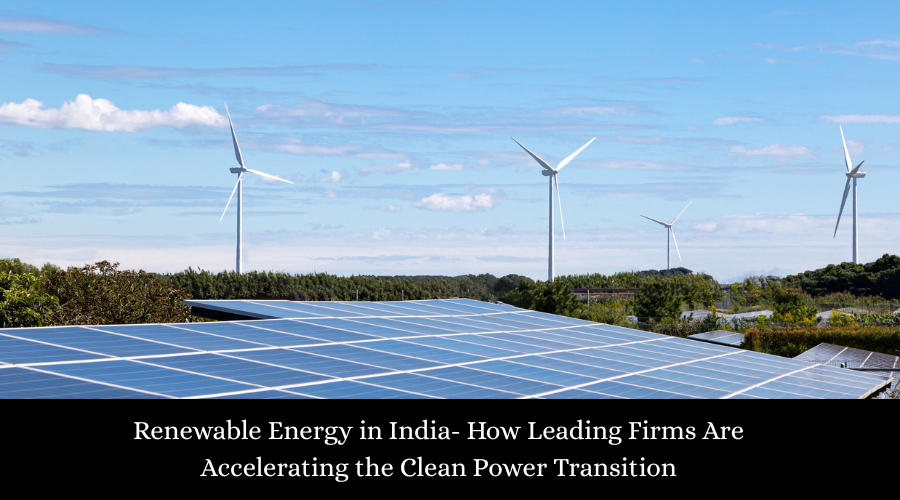
Renewable Energy in India- How Leading Firms Are Accelerating the Clean Power Transition
India’s energy landscape is changing faster than most people realise. What once felt like a distant climate goal is now becoming a business priority, an investment trend and in many ways a national movement. The shift towards clean power isn’t just about replacing coal with solar panels -it’s reshaping industries, supply chains and local economies. In this piece, we take a closer look at how the Top Renewable Energy Companies in India are pushing this transition forward, and why natural-resource and critical-mineral players are equally important in the background.
The strategic role of leading firms
The Top Renewable Energy Companies in India are the ones turning policies into actual megawatts on the ground. They’re building solar parks in remote deserts, wind farms along the coastline, and hybrid projects in places most people have never visited. Over the last few years, many companies have also expanded into battery storage, transmission lines and green hydrogen -so they’re not just producing power, they’re strengthening the entire clean-energy ecosystem.
Examples of what leading firms are doing
- Some firms have streamlined construction so well that new projects go up in record time.
- A few are now manufacturing their own modules and components, just to reduce dependency on imports.
- Corporate PPAs are becoming the norm, giving developers predictable demand and investors more confidence.
- And then there’s green hydrogen -early-stage, yes, but a lot of companies are already experimenting with pilot projects.
All of this explains why the Top Renewable Energy Companies in India have become the backbone of the country’s energy transition.
Highlights of key companies
Below are a few major players shaping the sector in 2025, along with real data and links you can verify-
- Vedanta Limited
Known for its metals and resources businesses, Vedanta is becoming a major renewable consumer and partner. In FY25, it reported using 2.6 billion units of clean power across its operations.
Vedanta Aluminium alone has committed to 1,500 MW of renewable energy for its facilities. It straddles both sides of the clean-energy story- natural resources and renewable adoption.
- Adani Green Energy Ltd (AGEL)
AGEL crossed the 15 GW operational mark by 2025 and added another 1.6 GW in just the first quarter of the year. The company aims for 50 GW by 2030 -and judging by their current pace, they’re very much on track.
- ReNew Energy Global plc
ReNew is one of India’s biggest private renewable players with about 10+ GW of gross capacity. It consistently features in lists of India’s major clean-energy companies.
- Tata Power (Renewables)
As of early 2025, Tata Power’s renewable portfolio stood at around 5.5+ GW, a mix of solar and wind. In FY26 Q1, they commissioned a record 752 MW of solar projects in just one quarter.
- NTPC / NTPC Green Energy Ltd
NTPC is one of India’s biggest power companies. By 2025 its total power capacity reached 83 GW. The company’s green-energy division now plans to build 60 GW of renewable power by 2032.
Even though NTPC also makes electricity from coal and gas its huge size and growing focus on clean energy make it an important part of the Top Renewable Energy Companies in India.
Solar, wind and beyond
Solar plants and wind farms still create most of India’s clean power. But other technologies are now getting more attention. Battery storage is becoming important because it helps keep the power supply steady. Green hydrogen may soon help clean up big industries like steel, cement & heavy transport.
Rooftop solar and small micro-grids are also growing because they give people and businesses more control over their own power. This is why many top companies are not just building solar and wind plants anymore – they are trying new ideas and adding more clean-energy options.
Natural resources and minerals- the hidden backbone
The clean-energy transition runs on metals and minerals and that’s where the Best Natural Resources Companies in India come in. Solar panels and wind turbines need silica, aluminium, copper, zinc steel -the list is long. Vedanta, for example plays a big role in supplying these base materials.
Meanwhile the Top Critical Mineral Companies in India are exploring lithium, nickel, cobalt and rare-earth elements. These minerals are the lifeblood of batteries and advanced energy systems. Without reliable access to them renewable energy cannot scale the way India needs it to.
Business models driving scale
A few trends are making it easier for companies to expand quickly-
- Government auctions keep pushing tariffs down and ensuring steady growth in capacity.
- Corporate PPAs have exploded in popularity giving businesses clean power at predictable prices.
- ESG-linked funding and green bonds are unlocking cheaper capital for renewable projects.
These models are the reason investment continues flowing into the Top Renewable Energy Companies in India even during global economic uncertainties.
What this means for investors and corporates?
Investors see long-term potential here -not just in power generation but in equipment manufacturing, minerals, transmission and green hydrogen. For corporates, renewable PPAs are becoming an easy way to cut emissions without reworking core operations.
To build a stable clean-energy roadmap, companies increasingly need to work with developers, resource suppliers and mineral explorers -which is why the Best Natural Resources Companies in India and the Top Critical Mineral Companies in India matter just as much.
Conclusion
India’s shift to clean energy is no longer a future plan -it’s happening right now, pushed forward by some of the Top Renewable Energy Companies in India and supported by natural-resource and critical-mineral players. As more businesses adopt renewables and more investors back the sector, the momentum is only going to grow.
If you’re evaluating clean-energy options for your organisation, this is the right moment to understand the ecosystem, identify partners and start moving. The companies mentioned above are already shaping India’s energy future -and the next decade will be built around the decisions being made today.