
 Riya Sharma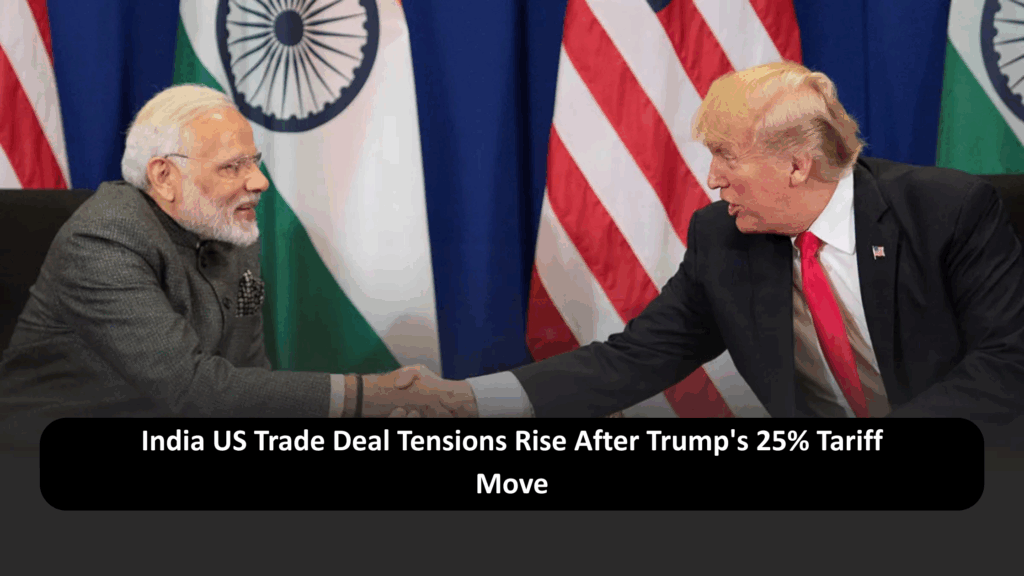
In a dramatic and sudden move, on July 30, 2025, the U.S. President Donald Trump said that the United States will place 25 percent- tariff-ta on all items imported to India, which will go into effect, starting August 1. This is in the wake of negotiations to seal a trade deal between India and the US, which now faces an uncertain future. Trump also threatened there will be more sanctions since India is still buying oil and defence equipment in Russia
Why This India US Trade Deal Is Happening?
Trump alleges that India has some of the highest tariffs in the globe and the imposition of non monetary trade barriers which erect hindrances in the access by U.S. Specifically, he denounced the continuance of purchases of military equipments and energy by India with Russia-he termed the practices as all the things ungood in the ongoing Ukraine conflict. Wrapped in terms of tough talk, Trump at the same time called India a friend and this contradiction says a lot about the current India-U.S relations today.
Director of the National Economic Council, Kevin Hassett, also announced that additional information regarding Russia associated fines would arrive soon.
Impact on India’s Economy
The tariff is likely to bring short term harm to the export intensive industries of India. The major issues of concern are:
- These Textiles, garments, auto parts, chemicals, pharmaceuticals and ceramics, which have a major dependancy on exports to the U.S.
- Pharmas and cars, which may start declining on a large scale, may cause the possibility of 20 basis point off shaving in GDP growth of India in case there is no respite till September or October.
- Micro, small and medium scale enterprises (MSMEs), who experience a ripple effect of the disheartenment of large industries, but export cartels find the opportunity of export diversification through FTA with UK, Australia and others.
- Volatility in the stock market and currencies: Sensex declined nearly 800 points and the rupee weakened in the offshore trading shortly after the announcement.
Industry and Political Reactions
The FICCI weighed in saying that it looked forward to a mutually acceptable solution as the move will affect Indian exporters. Nonetheless, it caused optimistic hopefulness that the impending India US trade deals negotiations can provide a fruitful decision in the short run.
The decision was condemned by opposition leaders of Congress party particularly in India dubbing Prime Minister Modi responsible and India was incurring the wrath of becoming payback of the friendship forged by Indian Prime Minister with Trump of America.
The Trade Ministry officials in India said the government is studying implications and reiterated its pledge to offer a fair, balanced and mutually beneficial bilateral trade agreement with the U.S.
What This Means for the India US Trade Deal
This unexpected escalation could significantly complicate the finalization of an India US trade deal:
- Meaningful negotiations were underway: There had been several rounds of negotiations on this issue between the two countries with an impending trade delegation visit to Delhi in the first week of August. Just preceding these discussions is the tariff slap that puts this progress into question.
- Pressure tactic or breakdown? Analysists indicate that Trump is exercising economic power to compel India into greater concessions particularly on how India can lower its tariff levels and trade with Russia.
- Tariff not over yet: Trump despite the tariff stated that the U.S and India are still talking. He said clarity would be attained on the situation by the end of the week.
Strategic and Geopolitical Overtones
Along with trade, the relocation has more geopolitical implications:
It represents how Washington is trying more generally to economically isolate Russia by attacking its largest customers such as India and China with tariffs and threats of secondary sanctions.
Another mention made by Trump was BRICS–potentially anti-US–linked to the fact that India was on the side of rising markets that were struggling against the dominance of the dollar.
Possible Scenarios Ahead
- Bilateral Compromise: India can compromise by providing tariff cuts or we do not want a complete implementation and maintain the hopes of a complete trade deal.
- Export switch: The concerned industries can change to alternative markets, since under existing FTAs they can play to cut out the losses in the U.S.
- Phase-in elimination: Should the talks succeed, it is possible that Trump could lift or repeal tariffs and penalties.
- Unresolved tensions: With a worse of the situation, things could sour between India and U.S. along both economic and strategic lines with long term ambitions like the $500 billion in bilateral trade by 2030 taking a beating.
Summary
The new tariff order touted by President Trump 25 % tariffs on Indian imports combined with penalty of an unknown amount ostensibly related to Russian trade has caused turbulence in the India US trade deal deal process. With major export industries in the firing line, markets trembling and political fury rising in the country, the way ahead for India is how carefully diplomacy and its skill performs in calming tempers and finding some space where a reasonable trade relationship can be reached.
India can no longer afford to choose between both sides as the strategy on both fronts has been pushing towards them from an economic stance and geopolitical reality.
Navigating Forward
- Exporters should assess market diversification and tap into alternative export channels.
- Policy-makers must maintain open dialogue, protect national interests, and expedite possible trade agreements.
- Investors and analysts must monitor developments, particularly expert commentary on GDP projections and currency markets.
As India and the U.S. proceed into this critical week, clarity on the India US trade deal may very well determine the direction of bilateral relations for years to come.