 Rajveer Sekhawat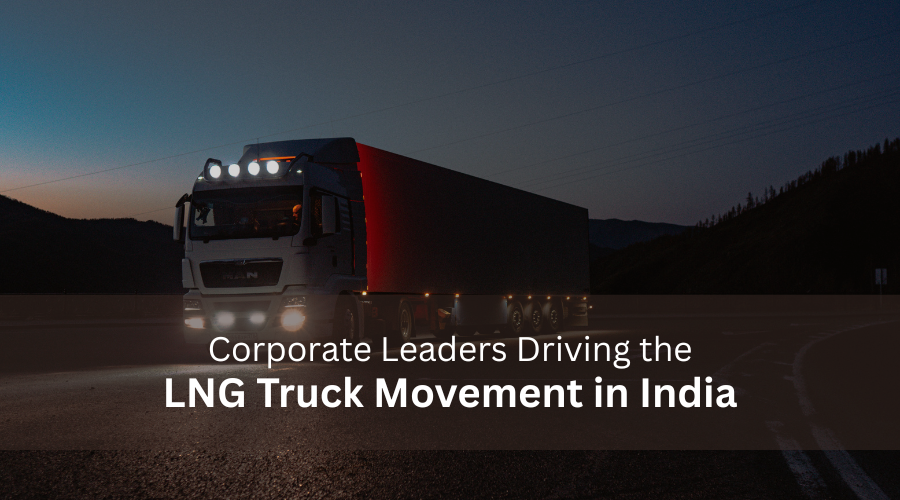
As India works toward clean energy to cut down pollution, LNG trucks in India are becoming an important part of the journey. While electric vehicles get most of the attention, one should note that liquefied natural gas (LNG) is also a cleaner & more practical choice, especially for heavy trucks that travel long distances. But for this change to really happen, India needs more than just new technology. It needs strong leadership – companies that are ready to take risks, build new infrastructure & work together across the industry.
In this article, we’ll look at some of the leading companies bringing green trucks in India to life and see how their efforts are helping grow green mobility in India on a large scale.
India’s Freight Future Runs on LNG – Here’s Why
Before we talk about the big companies, let’s first understand why LNG trucks in India are becoming popular.
- LNG (Liquefied Natural Gas) can cut carbon emissions by about 20–30% compared to diesel. It also reduces smoke, sulphur, and other harmful particles in the air.
- The Indian government is supporting this shift. New fuel policies plan for about one-third of heavy trucks to run on LNG in the next few years.
- The main problem right now is the lack of fuel stations. Truck owners need more LNG refuelling points on highways before they can fully switch.
- Compared to waiting for electric or hydrogen trucks, LNG is ready to use now and works better for long trips.
That’s why corporate leaders play such an important role. Truck makers, transport companies, fuel providers, and energy firms must work together to build a smooth and reliable LNG system across India.
Industry Pioneers Behind the Rise of LNG Trucks in India
Blue Energy Motors & Anirudh Bhuwalka
One of the most visible names in this space is Blue Energy Motors, led by CEO Anirudh Bhuwalka. This Pune-based start-up has positioned itself as a pioneer of LNG trucks in India. Under Bhuwalka’s leadership:
- They launched India’s first heavy-duty LNG truck and have been scaling sales aggressively across South and West India.
- They secured a tender from the Container Corporation of India (CONCOR) to deliver 50 LNG trucks, further proving viability in institutional fleets.
- Blue Energy is forging partnerships (e.g. with IVECO for LNG engine tech) to accelerate development.
- The company also launched EV Trucks for short hauls recently, with battery swap technology.
Bhuwalka’s vision is clear: blend entrepreneurship with deep domain know-how and partner across the ecosystem to drive adoption.
Essar Group via GreenLine and Ultra Gas & Energy
The Essar Group, a diversified industrial conglomerate, is making a decisive push into decarbonised logistics. Its arm Essar Green Mobility, working together with GreenLine Mobility Solutions, is creating an integrated platform: from manufacturing to fleet operations and fuel infrastructure.
Some highlights:
- Essar, through GreenLine, targets a $1 billion turnover in three years, riding a planned “10,000-truck platform” blending LNG and electric trucks.
- Already, nearly 700 LNG trucks are in operation under their banner, tackling long-haul segments.
- GreenLine plans to expand to thousands more, while investing in fueling infrastructure through its subsidiary Ultra Gas & Energy.
- GreenLine is also collaborating with large clients: Flipkart has begun deploying 25 LNG trucks in its network.
- Essar’s fuel arm, Ultra Gas & Energy (UGEL), is backing LNG retail infrastructure expansion along freight corridors.
By owning multiple parts of the value chain-from fuel to trucks to operations-Essar is one of the most vertically integrated corporate actors pushing green mobility in India.
Tata Motors
As one of India’s biggest commercial vehicle manufacturers, Tata Motors offers scale and clout. Recently, it commenced delivery of its Tata Prima 5530.S LNG trucks to Clean Green Fuel & Logistics, with an MoU to supply 350 additional units.
This is significant because OEM buy-in is essential: when a mainstream player like Tata leans into LNG, it gives confidence to buyers and signals maturity in technology readiness.
Tata’s decision underscores that green trucks in India are not just niche experiments but can enter core commercial vehicle portfolios.
Others: Volvo, Ashok Leyland & Infrastructure Allies
Although less in the headlines, legacy players like Volvo and Ashok Leyland are exploring LNG offerings in India. Meanwhile, fuel and gas companies – such as Adani Total Gas and Indraprastha Gas – are planning to scale LNG stations across key corridors.
These players are essential enablers – no matter how many LNG trucks are sold, adoption will stall without refuelling infrastructure.
The Blueprint: How India’s LNG Truck Ecosystem Is Taking Shape
What distinguishes these corporate champions is not merely their product offerings, but how they orchestrate change across the value chain.
- Ecosystem Integration
Leaders like Essar are not sticking to one vertical. They are blending manufacturing, fleet operations, and fuel retail under one umbrella. This helps reduce friction (e.g. dependence on third-party fuel suppliers), coordinate logistics, and manage margins more sustainably.
- Strategic Partnerships & Clients
Blue Energy, GreenLine and others are actively forming offtake agreements with major logistics, FMCG and industrial clients. For instance, GreenLine’s tie-up with Flipkart for 25 LNG trucks is a signal play. They’re not waiting for a perfect world-they’re pulling customers into their initiative.
- Infrastructure Investment
These corporate actors are investing in or backing LNG refuelling networks (along key freight corridors) to reduce range anxiety. GreenLine is expanding its station count, Essar’s UGEL is scaling LNG retail, and utilities like Indraprastha Gas are committing to 100 LNG stations by 2029–30.
- Risk Taking & Scaling
Moving into LNG trucking is capital-intensive and uncertain. These firms are placing big bets (e.g. Essar’s $140M initial investment in clean logistics) to get scale and momentum. Scaling quickly helps reduce per-unit costs, improves reliability and shifts the narrative from pilot to mainstream.
ALSO READ: India’s Green Energy Surge: More Than a Transition, It’s a Total Rethink
Conclusion
The shift to green mobility in India won’t happen only because of government plans or big ideas. It will happen because strong business leaders are ready to take action, invest money, and try new things. LNG trucks in India can make a big difference in cutting pollution from heavy transport-if used in the right way.
Who are the top companies promoting LNG trucks in India?
Some of the key players are Blue Energy Motors, Essar Group’s GreenLine Mobility, and Tata Motors. They are joined by fuel providers like Adani Total Gas, Ultra Gas & Energy, and Indraprastha Gas, who are setting up LNG stations and support systems. Together, these companies are building the full setup-making trucks, creating fuel stations, and running fleets for clean transport.
These leaders-Blue Energy, Essar/GreenLine, and Tata Motors-are already working hard to bring green trucks in India from small trials to full-scale use.
For transport owners, logistics managers, and fleet operators, now is the best time to get involved. Connect with these companies, test LNG trucks, and build partnerships. Those who act early will not only reduce emissions but also save costs, build trust, and get ahead in India’s growing green transport movement.